Welcome to our store




There is a persistent misunderstanding surrounding ouvert lingerie, one that is both understandable and deeply misleading: that its purpose is mere exposure. A common assumption is that the value of an open-cup bra or ouvert brief lies in how much of the body is revealed, and that its relevance is inseparable from provocation.
This reading is convenient, especially in a digital culture trained to equate visibility with meaning. Yet, it fails to engage with the real design intelligence behind the category. It misses why luxury ouvert lingerie continues to resonate quietly, persistently, and often invisibly beyond the algorithmic stage.
To understand the ouvert aesthetic properly, one must begin by abandoning the language of “showing” altogether. Instead, we must return to a more classical vocabulary: line, proportion, interruption, and intention.

Ouvert Design: Beyond the Misconception of Exposure
Exposure is a quantity; design is a relationship.
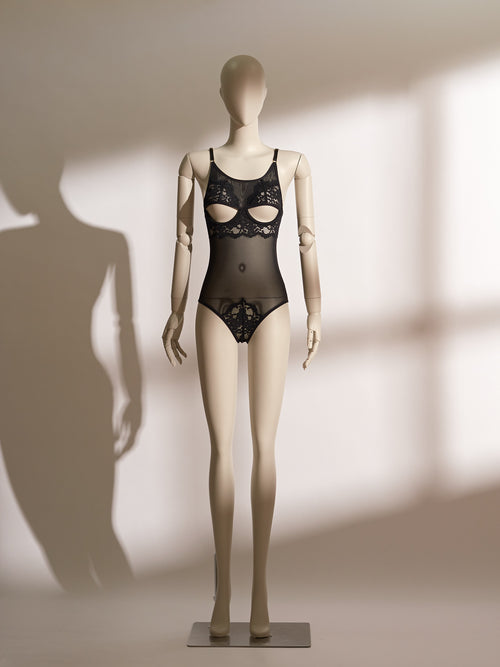
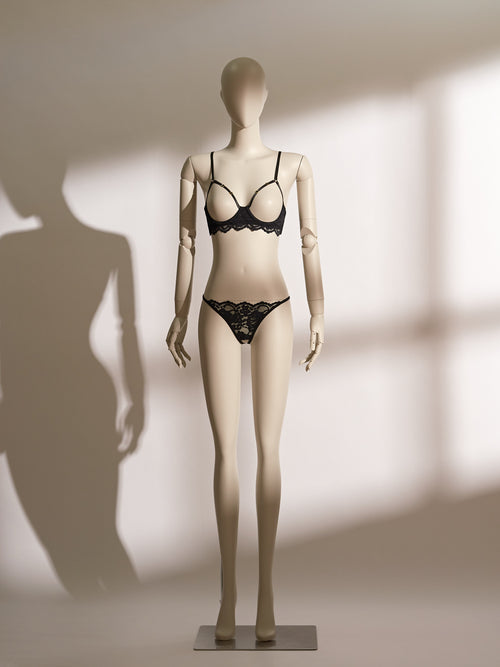
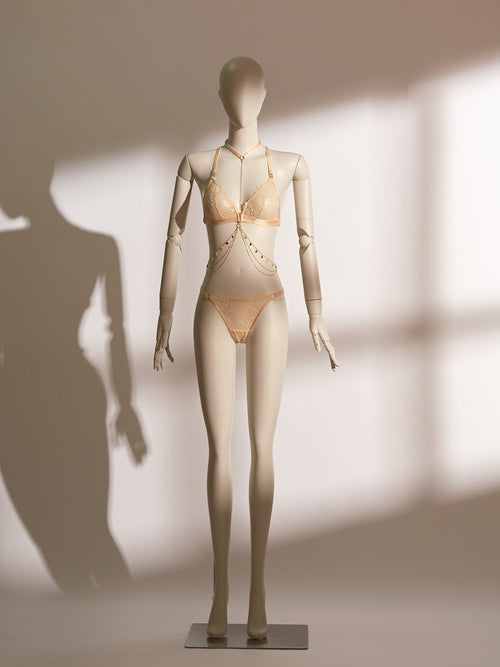
What fine ouvert lingerie does is not simply remove fabric, but reposition it, allowing absence to function as deliberately as presence. In this sense, ouvert design belongs less to the lineage of erotic display and more to the tradition of negative space in art and architecture, where what is left untouched becomes as meaningful as what is shaped.
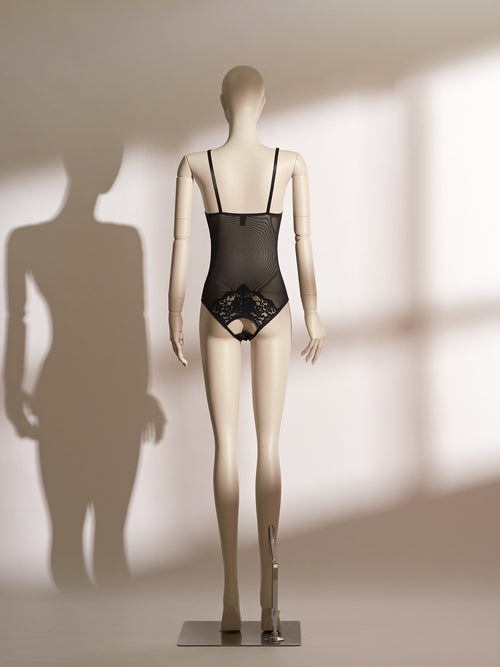
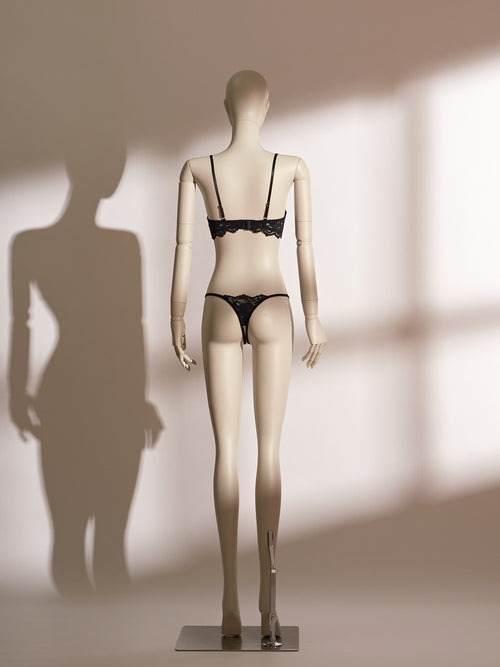
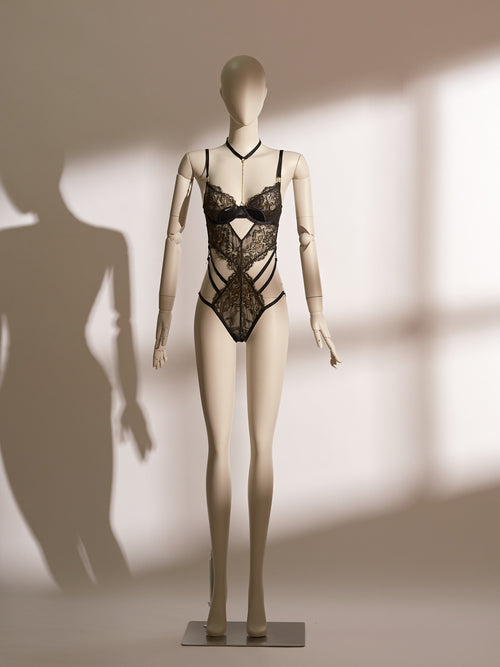
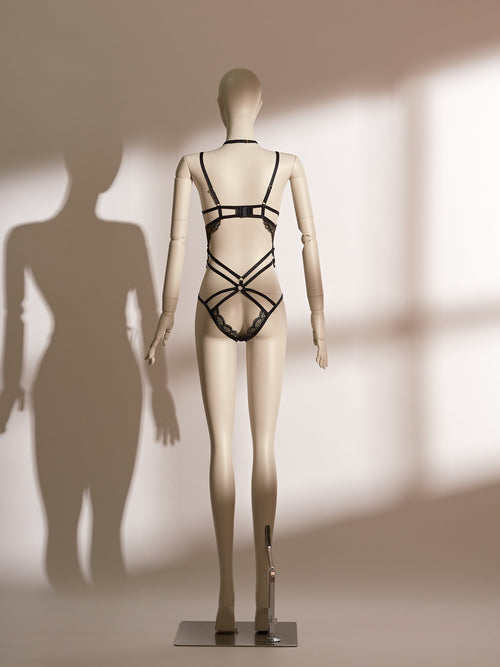
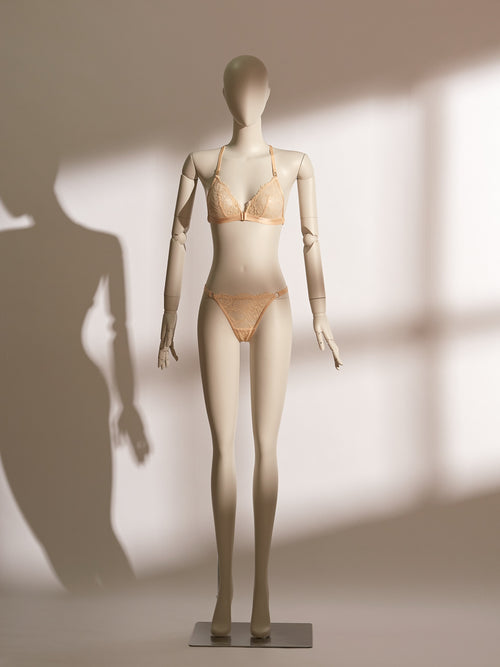
This is why many ouvert bodysuits appear restrained rather than excessive when viewed closely. The openings are rarely arbitrary. They follow the logic of the human form—its natural transitions, its curves, and pauses. The way the body is already organized before any garment is introduced. When executed well, the result is not exposure, but clarity: the body appears more legible, not more revealed.
The Architecture of Lingerie: Lines, Not Skin
At its best, ouvert lingerie is an exercise in line work.
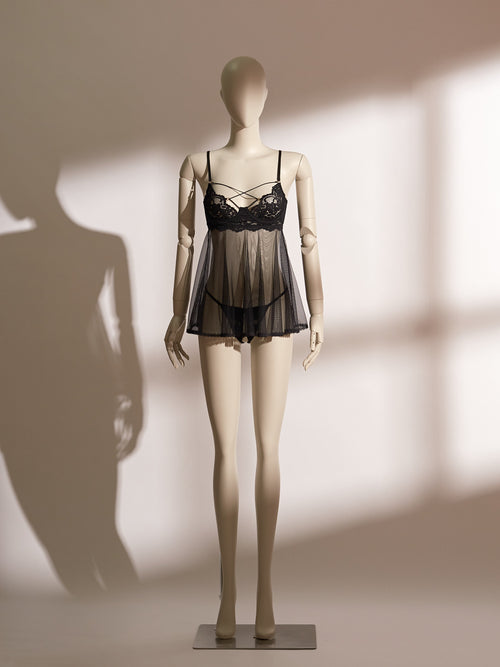
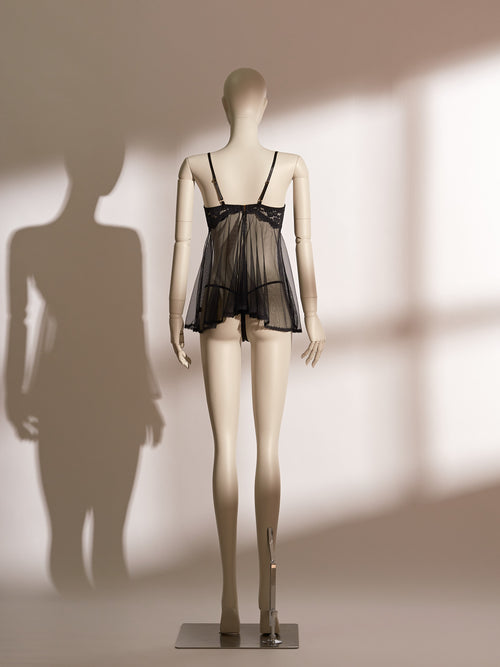
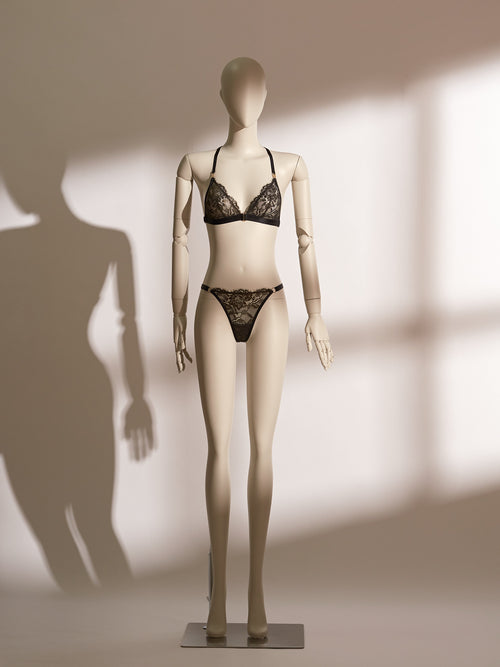
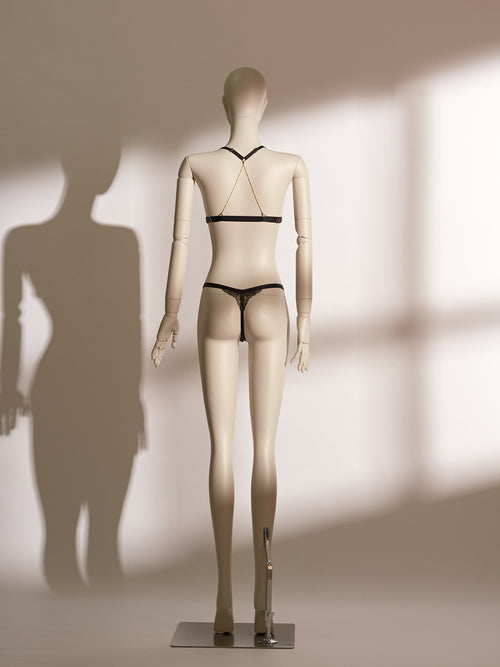
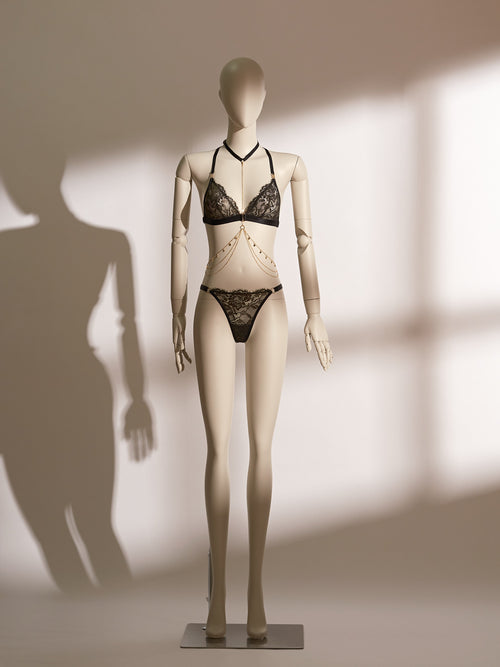
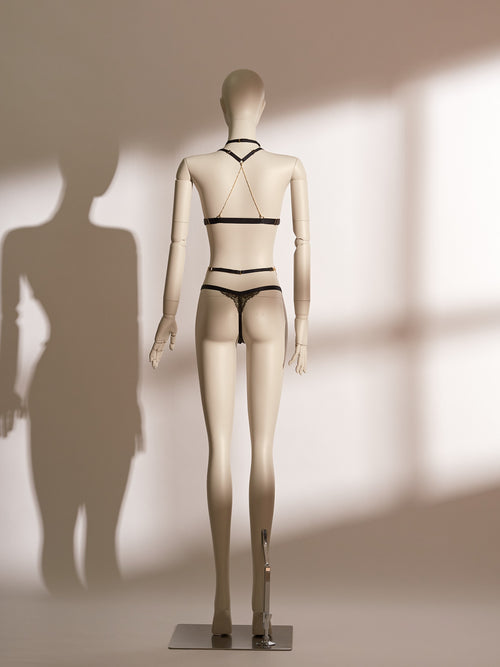
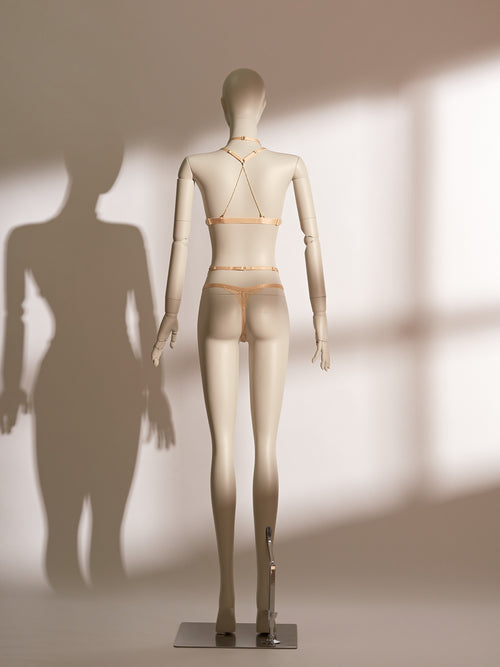
Straps do not merely hold; they trace. Cutouts do not shock; they interrupt. Openings do not invite spectacle; they invite attention to continuity—the way a line travels across the torso, pauses, and resumes. This is why the most enduring ouvert designs are often those that feel architectural rather than ornamental.
In fashion history, garments that rely solely on exposure age quickly because their effect depends on novelty. However, lingerie sets that rely on proportion endure. Proportion speaks to something universal: the way humans instinctively recognize balance.
Classic ouvert lingerie, when designed with discipline, belongs firmly to the latter category.
Classical Aesthetics in an Intimate Register
It is tempting to frame lingerie purely within contemporary discourse, but this framing obscures a quieter lineage. Ouvert design shares far more with classical drapery, Renaissance figure studies, and mid-century couture understructures than with modern shock aesthetics.
The emphasis on the beauty of the human form as it exists, rather than as it performs, is central here. Luxury lingerie in this style does not attempt to reshape the body into a statement. Instead, it acknowledges the body as something already coherent, already worthy of careful framing.
This is also why ouvert pieces often pair so naturally with vintage or classic visual languages. The restraint, the measured use of detail, and the refusal to over-explain are not retro gestures—they are timeless ones.
Intimacy Without Performance
Perhaps the most important reason ouvert lingerie resists algorithmic dominance is precisely because it is not designed for public consumption.
It functions best in private, in stillness, in moments where performance is unnecessary. This is not lingerie meant to be optimized for feeds, thumbnails, or scrolling behavior; it is meant to be experienced spatially and emotionally. Its appeal is personal rather than broadcast, which explains why its visibility in search behavior often exceeds its presence in social feeds.
People seek out quality ouvert pieces deliberately. They do not stumble upon them accidentally.
Conclusion: Beyond Provocation
Reducing ouvert lingerie to provocation misses its most significant contribution: its ability to articulate intimacy without excess narrative. It does not demand interpretation. It does not insist on explanation. It simply aligns fabric, body, and intention into a coherent visual sentence.
In a cultural moment saturated with loud symbolism, this restraint feels almost radical. Ouvert lingerie is not about being seen more. It is about being seen correctly.