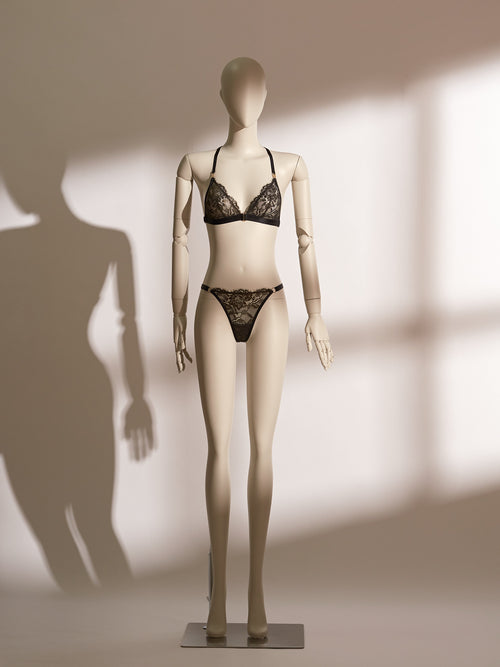
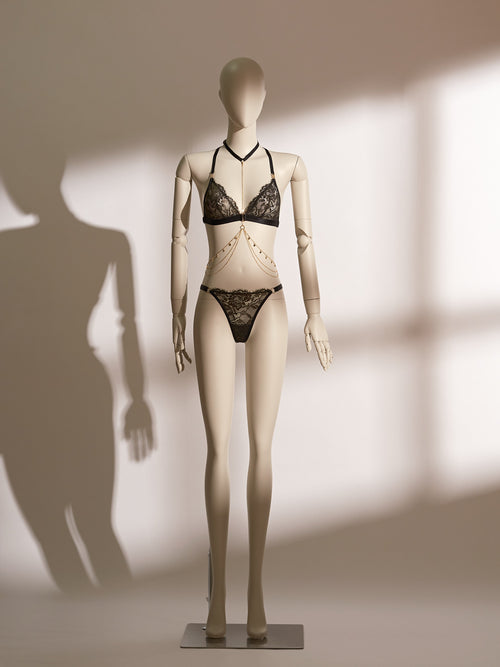
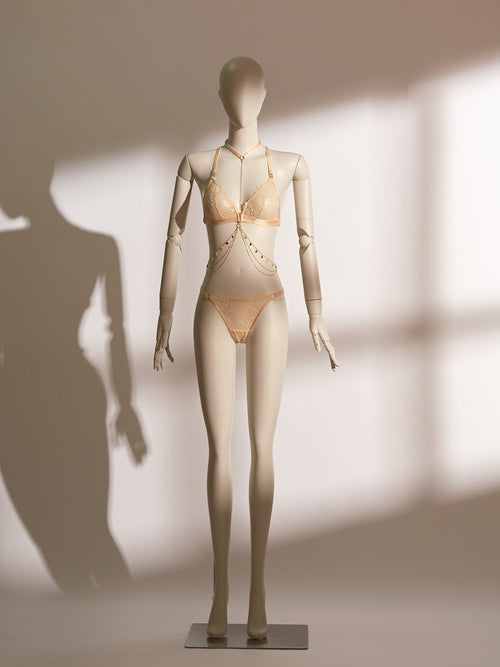
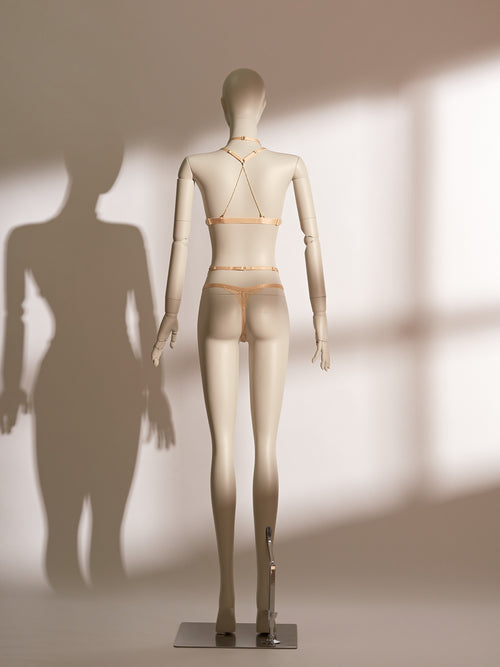
Welcome to our store




Key Takeaway: A supportive bra is not a product of magic or marketing; it is a product of physics and material science. Understanding the mechanics of the band (friction), the wire (weight transfer), and the fabric (elastane recovery) will permanently change how you buy and wear lingerie.
The lingerie industry is notorious for selling "miracles." We are constantly marketed revolutionary new foams, magical lifting straps, and gravity-defying designs.
But let’s be brutally honest: you cannot out-market gravity.
A truly supportive bra relies on the exact same principles used to build a suspension bridge: tension, weight distribution, and material strength. When you strip away the lace and the silk, a bra is an architectural garment. If the foundation is flawed, the building will fall.
It is time to stop buying marketing fluff and start understanding the engineering of your top drawer. Here is the no-BS guide to how your lingerie actually works.
1. The Physics of the Band: Your Main Support System
The biggest myth in lingerie is that the shoulder straps do the heavy lifting. In reality, approximately 82% of a bra's support comes from the band that runs along your ribcage.
If you are relying on your straps for lift, you are putting the entire weight of your bust onto two narrow strips resting on your delicate trapezius muscles—which leads to shoulder indents and severe back pain.
The band works through a physics concept called The Normal Force and Friction.
- When you secure a snug, elastic band around your torso, the band wants to contract.
- Your ribcage resists this contraction, creating a "normal force" (perpendicular resistance).
- This resistance creates friction against your skin, which anchors the garment and stops the weight of your bust from pulling the bra downwards.
The Engineering Rule: If you can pull your bra band more than two inches away from your spine, you have lost your structural friction. The band must be snug to function.

2. The Truth About Underwires
Underwires are often viewed as medieval torture devices, but when engineered and fitted correctly, they are highly efficient weight-transfer tools.
Modern underwires were actually inspired by 1930s aerospace and bridge engineering. Their purpose is to anchor the cups against the chest wall, encapsulating the tissue and transferring the downward force of the bust into the band.
When underwires hurt, it is an engineering failure, usually resulting in what fitters call a "boob hat".
- The "Boob Hat" Effect: This occurs when the wire sits on top of the soft breast tissue rather than sitting flush against the ribcage at the root of the breast (the inframammary fold).
- The Gore: The center part of the bra between the wires (the gore) must "tack" or lay completely flat against your sternum. If it floats, the cups are not encapsulating the tissue, and you are being squeezed, not supported.

3. Material Science: Why You Need Synthetics
We frequently hear demands for "100% cotton bras" for sustainability reasons. While cotton is breathable and hypoallergenic, it is structurally incapable of providing high-level, long-term support because it lacks elasticity.
Lingerie requires a highly calculated mix of synthetic polymers to function:
- Nylon (Polyamide): Developed in the 1930s, nylon provides the structural strength. It has an incredibly high tensile strength (4-7 grams per denier) but lacks stretch. It acts as the "steel beams" of the fabric.
- Elastane (Spandex/Lycra): Invented in the late 1950s, elastane can stretch significantly and snap back to its original shape. However, pure elastane cannot withstand mechanical stress on its own.
The industry standard for premium, durable support is an 85% Nylon / 15% Spandex blend. This specific ratio allows the garment to stretch up to 300% while maintaining a 95% recovery rate over thousands of uses.

4. Care is Preservation (Don't Melt Your Elastane)
Because your bra relies on these synthetic polymers, how you wash it determines its structural lifespan.
Elastane is highly sensitive to heat. When you put a bra in the dryer, the high temperatures literally melt and snap the elastane fibers. This destroys the "recovery" of the fabric. The bra may look the same, but the microscopic architecture has collapsed, meaning it can no longer provide the necessary friction around your ribcage.
Treat your lingerie like high-performance gear: hand wash cold, or use a delicate cycle, and always air dry.
Frequently Asked Questions (FAQ)
Why do my bra straps keep falling down? Failing bra straps are rarely a strap issue; they are a band issue. If your band is too loose, it rides up your back. When the back of the bra rides up, it creates slack in the shoulder straps, causing them to slip off the shoulders.
Does a larger bust require a thicker underwire? Yes. Underwires come in different gauges (thicknesses), such as 20, 22, and 24 gauge. A thicker gauge (like 24) is stiffer and resists bending under heavy weight, providing superior lift and shape retention for fuller busts.
What is the difference between elastane, spandex, and Lycra? Nothing. Elastane and spandex are interchangeable generic terms for the same highly elastic synthetic polymer. Lycra is simply a specific, trademarked brand name for elastane.